MANULIFE
Turning 141K Inactive Cards Into Self-Serve Growth
PRODUCT DESIGNER (IC)
2025
MANULIFE
Turning 141K Inactive Cards Into Self-Serve Growth
PRODUCT DESIGNER (IC)
2025
MANULIFE
Turning 141K Inactive Cards Into Self-Serve Growth
PRODUCT DESIGNER (IC)
2025
CONTENT
OVERVIEW
Turning 141K Inactive Cards Into Self-Serve Growth
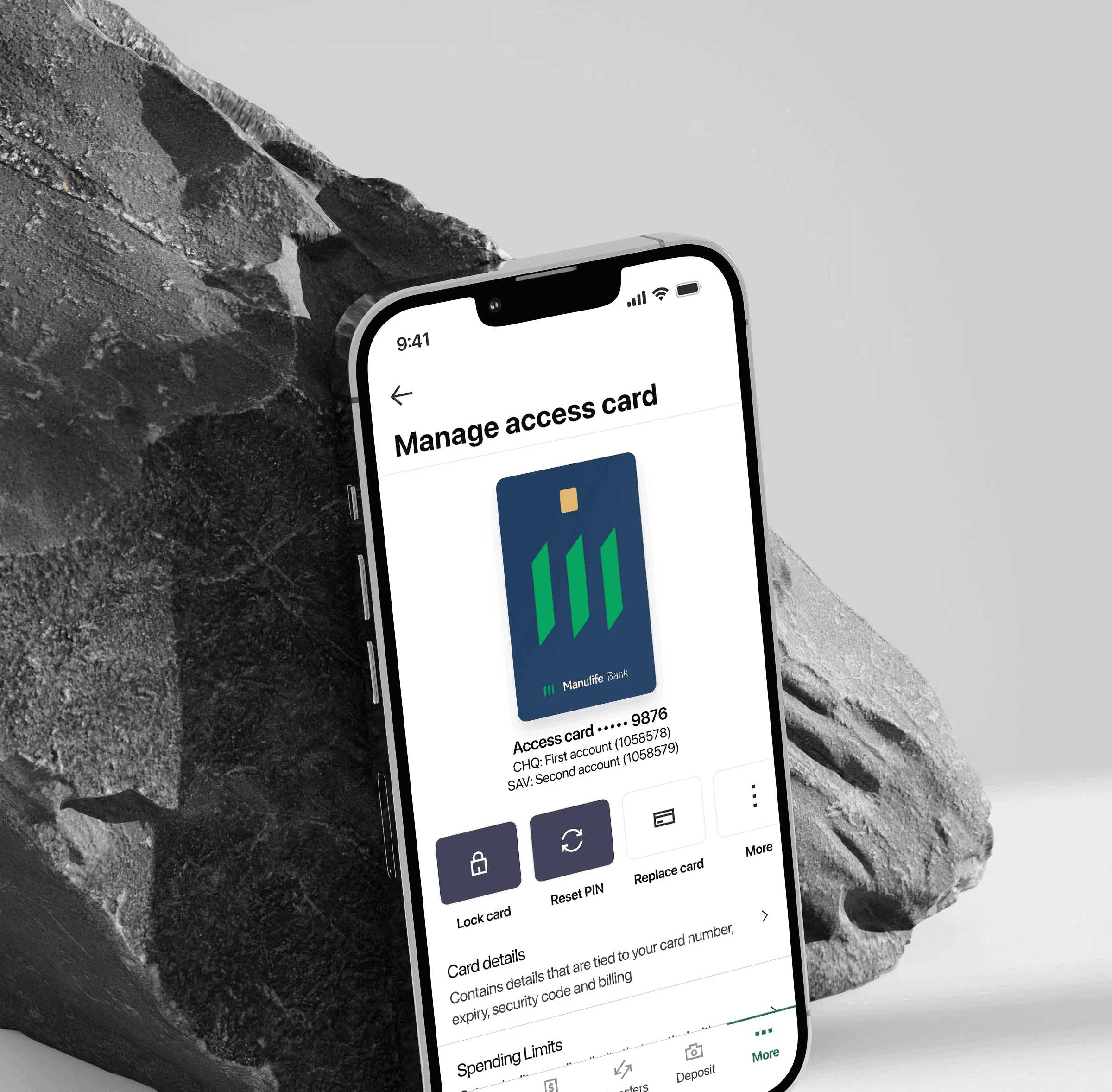
Traditional card activation was 100% phone-based, causing high call volume and user friction. I reframed the project from a simple "feature build" to a comprehensive System Strategy, negotiating a "good, better, best" roadmap that moved activation entirely into the mobile app.
IMPACT
10-Minute Call Reduction
Estimated to save 100K+ agent minutes per 10K customers by replacing phone-calls with self-serve flows.
141.7K Revenue Opportunity
Unlocked engagement and revenue potential across all previously inactive cards.
Stakeholder Buy-in
Moved the team from "Feature-Output" to "System-Outcome" through a scalable, multi-phase design strategy.
CONTEXT
PROJECT DELIVERABLE
TIMELINE
4 WEEKS
ROLE
PRODUCT DESIGN (IC)
CONTRIBUTIONS
UI/UX DESIGN
COMPETITIVE RESEARCH
PROTOTYPING
OVERVIEW
Turning 141K Inactive Cards Into Self-Serve Growth
Traditional card activation was 100% phone-based, causing high call volume and user friction. I reframed the project from a simple "feature build" to a comprehensive System Strategy, negotiating a "good, better, best" roadmap that moved activation entirely into the mobile app.
IMPACT
10-Minute Call Reduction
Estimated to save 100K+ agent minutes per 10K customers by replacing phone-calls with self-serve flows.
141.7K Revenue Opportunity
Unlocked engagement and revenue potential across all previously inactive cards.
Stakeholder Buy-in
Moved the team from "Feature-Output" to "System-Outcome" through a scalable, multi-phase design strategy.
CONTEXT
PROJECT DELIVERABLE
TIMELINE
4 WEEKS
ROLE
PRODUCT DESIGN (IC)
CONTRIBUTIONS
UI/UX DESIGN
COMPETITIVE RESEARCH
PROTOTYPING
THE CURRENT STATE
Operational overhead was skyrocketing.
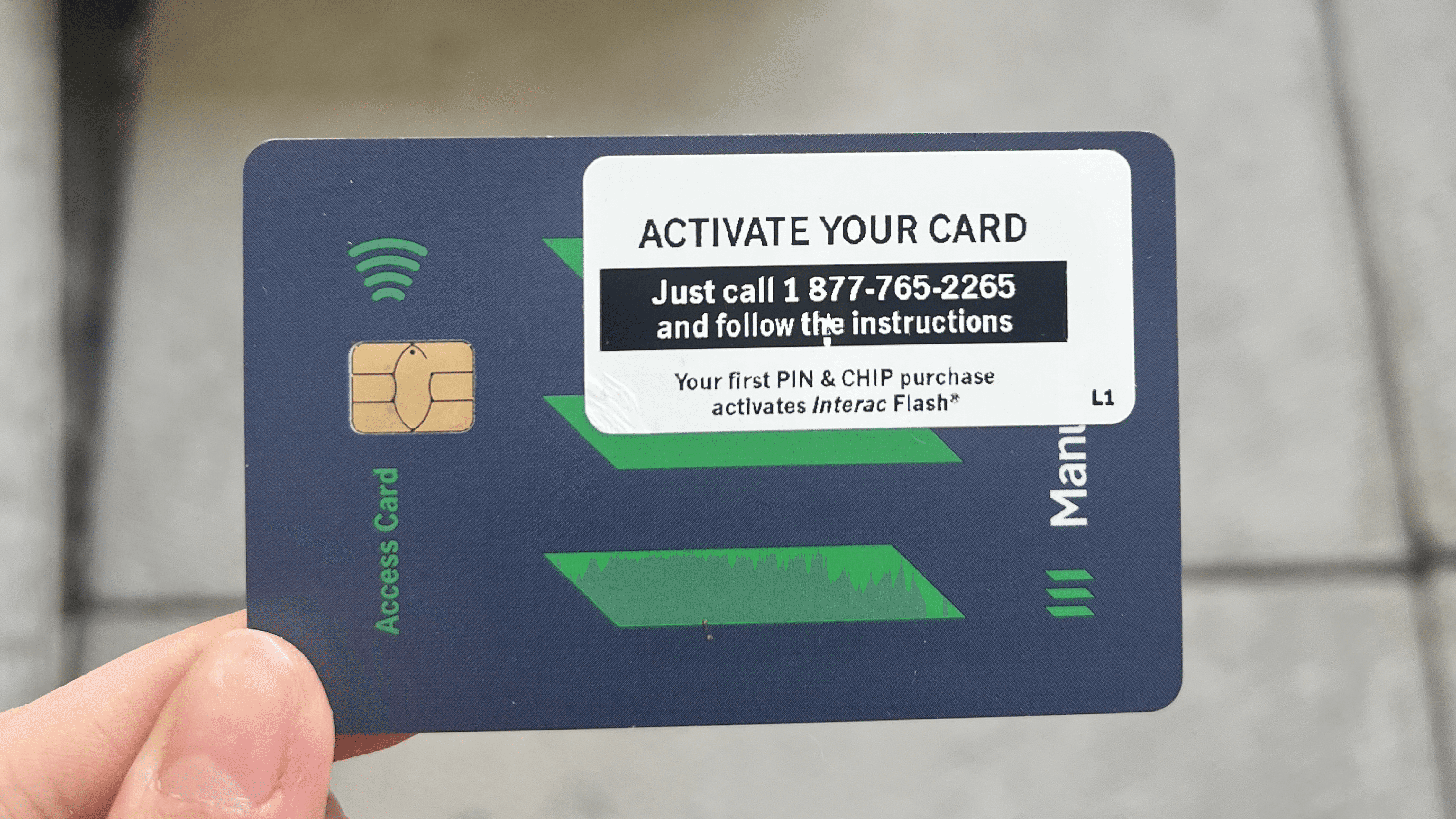
Each manual card activation required a 10-minute phone call, tying up support agents and creating a "queue tax" for customers. Simultaneously, 141.7K inactive cards sat as dormant assets, representing significant lost interchange revenue and zero customer engagement.
THE CURRENT STATE
Operational overhead was skyrocketing.
Each manual card activation required a 10-minute phone call, tying up support agents and creating a "queue tax" for customers. Simultaneously, 141.7K inactive cards sat as dormant assets, representing significant lost interchange revenue and zero customer engagement.

DIVE 1: SYSTEM STRATEGY
Beyond the "Front Door"—Closing the Card Management Gap
THE TENSION
In legacy fintech, the tension between "launching fast" and "designing right" is constant.
The business requested a single "Activate" button to lower call volume. My audit revealed a deeper systemic failure: Activation was only the "front door." Without post-activation utility (Freezing, PIN resets, Tracking), users were forced back into phone queues at the first sign of friction
I reframed the project from a "one-off utility" to a Lifecycle Management Hub. This shifted the focus from a single button to a multi-phase roadmap that prioritized long-term retention alongside immediate call reduction.
THE TENSION
In legacy fintech, the tension between "launching fast" and "designing right" is constant.
The business requested a single "Activate" button to lower call volume. My audit revealed a deeper systemic failure: Activation was only the "front door." Without post-activation utility (Freezing, PIN resets, Tracking), users were forced back into phone queues at the first sign of friction
I reframed the project from a "one-off utility" to a Lifecycle Management Hub. This shifted the focus from a single button to a multi-phase roadmap that prioritized long-term retention alongside immediate call reduction.
THE FRAMEWORK
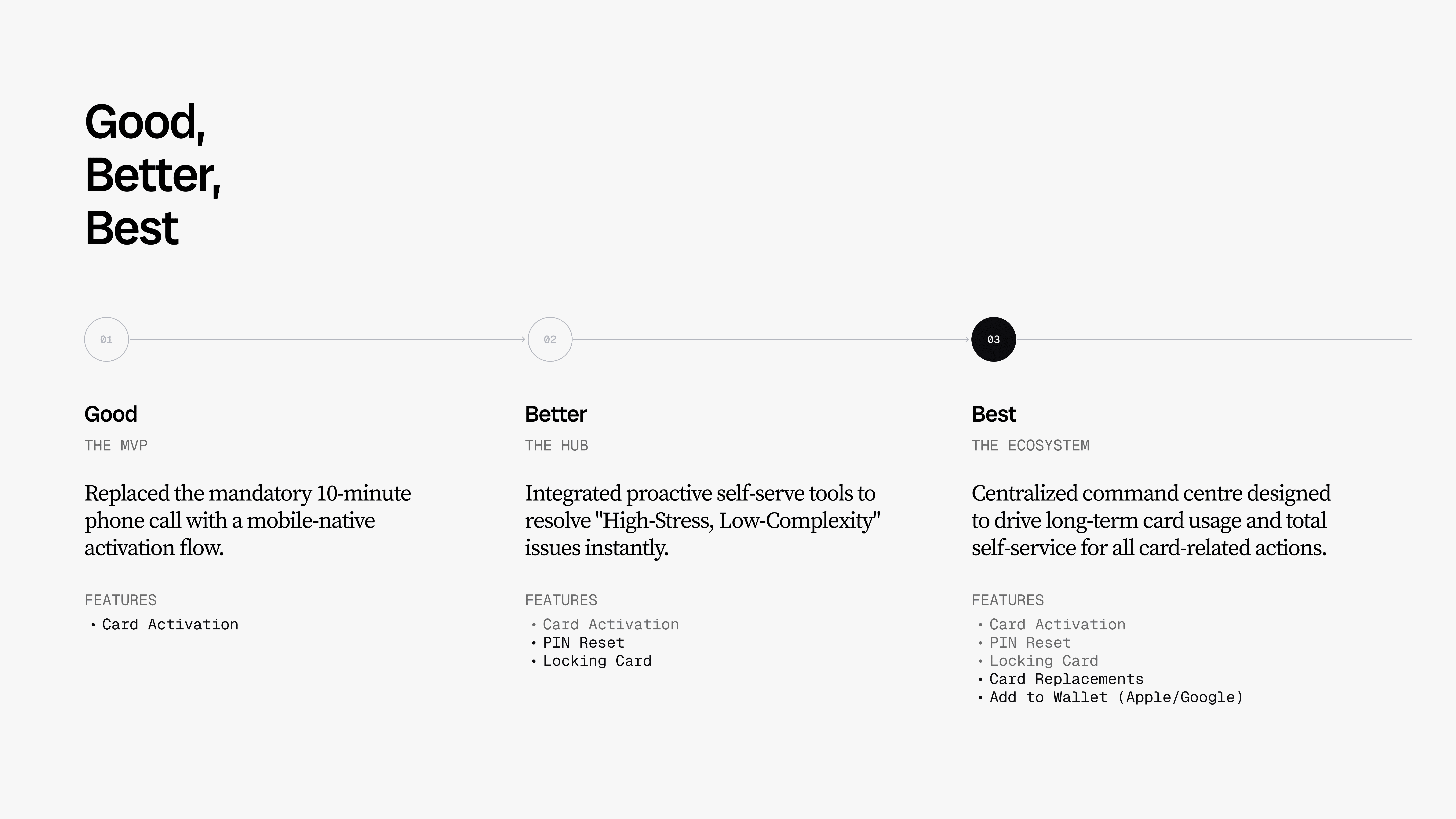
Good, Better, Best
By documenting the "Best State" with the latest components, I ensured the vision remained the "North Star" even when specific features were deprioritized for the initial launch.
THE FRAMEWORK
Good, Better, Best
By documenting the "Best State" with the latest components, I ensured the vision remained the "North Star" even when specific features were deprioritized for the initial launch.
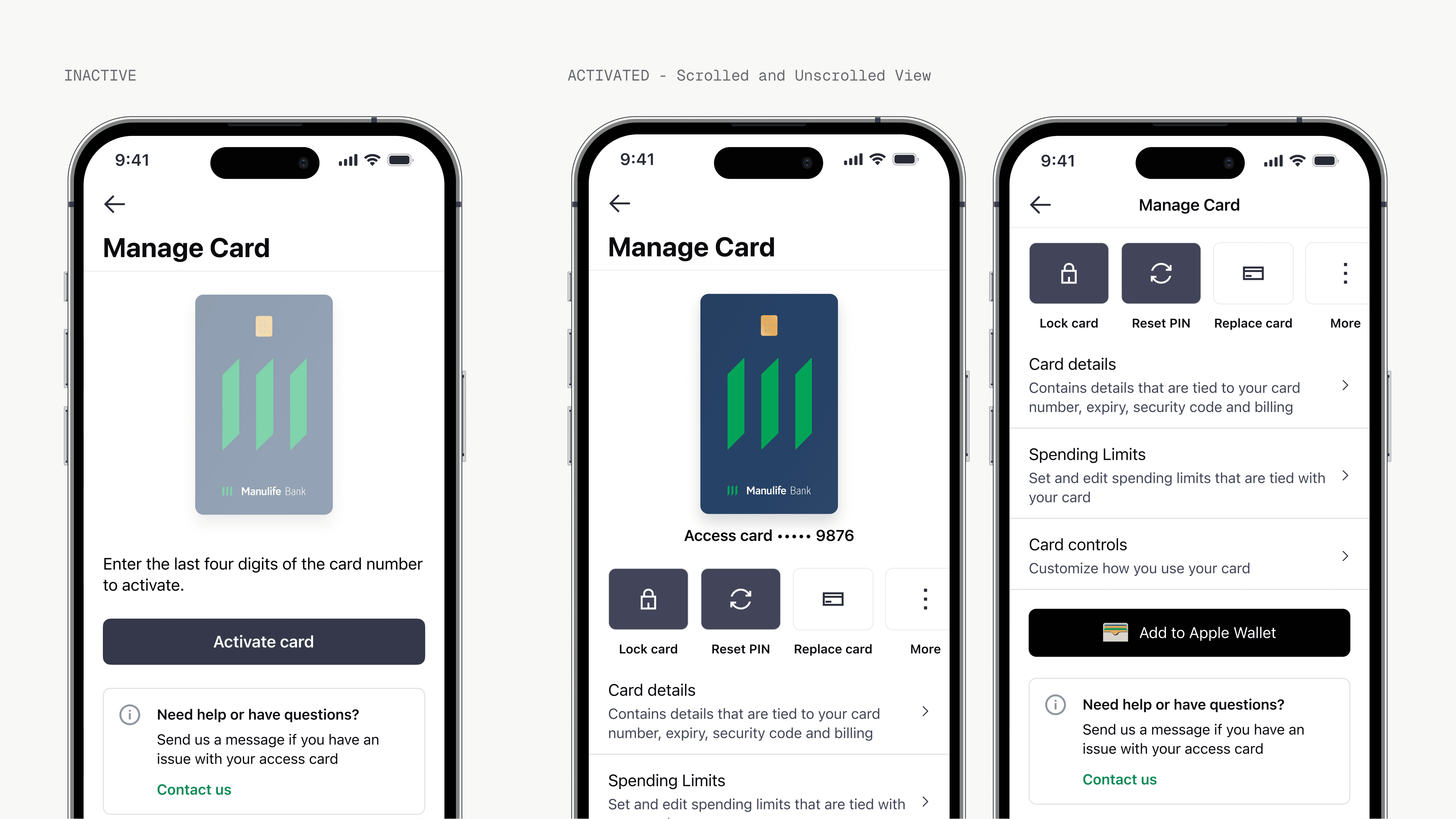
THE BEST STATE
Card Management Hub (Future State)
THE BEST STATE
Card Management Hub (Future State)
DIVE 2: THE PHYSICAL-DIGITAL BRIDGE
Interaction Strategy: Reducing Cognitive Load through Sensory Continuity for Activation
THE FRICTION
Users felt a "handoff gap" between receiving their physical card and navigating the app.
Traditional UIs require users to hunt for tiny CVVs or activation codes, leading to activation anxiety and support calls.
THE FRICTION
Users felt a "handoff gap" between receiving their physical card and navigating the app.
Traditional UIs require users to hunt for tiny CVVs or activation codes, leading to activation anxiety and support calls.
MOTION DESIGN
Mirroring the Physical Reality
I designed a high-fidelity motion experience that synchronized the app’s UI with the user’s physical movements: flipping + turning over the card - looking for the last four digits
MOTION DESIGN
Mirroring the Physical Reality
I designed a high-fidelity motion experience that synchronized the app’s UI with the user’s physical movements: flipping + turning over the card - looking for the last four digits
SOLUTION
End to End of the Card Activation
Refined with 2026 Global Design System Components.
SOLUTION
End to End of the Card Activation
Refined with 2026 Global Design System Components.
1. Flip Logic
I synchronized the app’s UI with the user’s natural physical movements. When a user turns their card over to find the last four digits, the digital card mirrors that exact rotation.
2. Highlights for Easy Scanning
By "spotlighting" the last 4 digits through lowering the opacity on the rest of the card and using an outline on the target digits, I removed all competing visual noise.
3. Progressive Animation
I used a staged animation sequence: first loading the card, then rotating it, and finally "spotlighting" the last 4 digits. I wanted the user feel that the animations were guiding them through each of their steps with them
REFLECTIONS
Scaling a system is as much about people as it is about pixels.
THE HARD LESSON
Selling is 60% of the Job
I realized early on that the most elegant designs fails if it isn't "sold" correctly to stakeholders. In a legacy organization, intuition isn't enough—data-backed storytelling is the only currency.
Using the 141.7K revenue gap as my anchor allowed me to move the conversation from "how it looks" to "how it scales," ultimately shifting the organization toward the "Best" state vision.
THE HARD LESSON
Selling is 60% of the Job
I realized early on that the most elegant designs fails if it isn't "sold" correctly to stakeholders. In a legacy organization, intuition isn't enough—data-backed storytelling is the only currency.
Using the 141.7K revenue gap as my anchor allowed me to move the conversation from "how it looks" to "how it scales," ultimately shifting the organization toward the "Best" state vision.
THE CONTINUED CHALLENGE
Earning the "Upstream" Seat
The biggest hurdle remains moving design from a downstream execution role to an upstream conception partner.
The Goal: To be in the room when the problem is being defined, not just when the feature is being built.
The Strategy: I’ve found that the best way to stop being a "pixel pusher" is to become a data advocate. By pushing for better tracking and folding our UX results back into the broader business strategy, I am proving that design is a predictable driver of ROI, not a decorative afterthought.
THE CONTINUED CHALLENGE
Earning the "Upstream" Seat
The biggest hurdle remains moving design from a downstream execution role to an upstream conception partner.
The Goal: To be in the room when the problem is being defined, not just when the feature is being built.
The Strategy: I’ve found that the best way to stop being a "pixel pusher" is to become a data advocate. By pushing for better tracking and folding our UX results back into the broader business strategy, I am proving that design is a predictable driver of ROI, not a decorative afterthought.
NEXT PROJECT: Bridging Inspiration and Purchase in a $2.7B Market →